Stenting
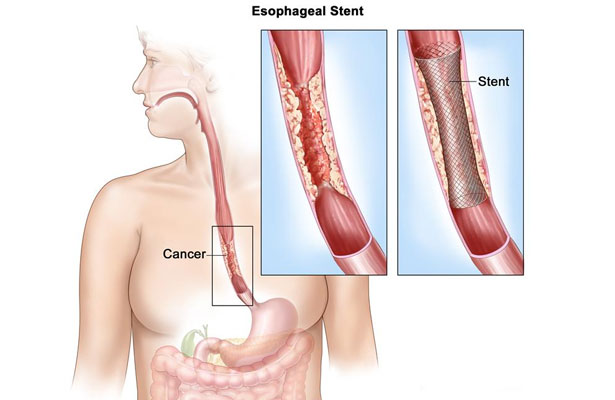
Esophageal Stenting
An esophageal stent procedure, a tube is placed in your esophagus to keep open a blocked area. The tube helps you swallow solids and liquids.
Your esophagus is the muscular tube connecting the back of your mouth to your stomach. When you swallow, the muscles of your esophagus contract. They propel food into your stomach.
Many health problems can partly block a portion of your esophagus. That can make it hard to swallow. The medical term for this is dysphagia. You might have pain when you swallow or feel like food is getting stuck in your chest. The food might come back up after you swallow. An esophageal stent can help reopen your blocked esophagus and ease symptoms.
The procedure might take place under general anesthesia or conscious sedation. If it takes place under general anesthesia, you will sleep through the procedure and feel no pain. If it takes place under conscious sedation, you will get medicines to make you relaxed and sleepy. The surgeon may numb the area under surgery so that you won’t feel much pain.
During the procedure, the surgeon places a long, thin tube (catheter) down the back of your mouth and into your esophagus. Next, the surgeon places a folded-up hollow tube (stent) over the catheter in the correct position across the blockage. The stent expands against the walls of your esophagus, giving support. Then the surgeon removes the catheter and leaves the stent in place.
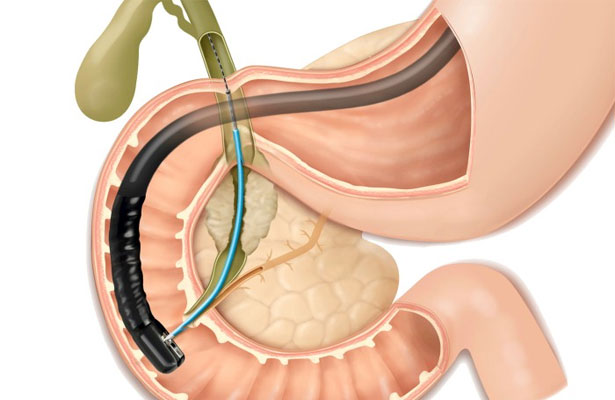
Biliary Stenting
Endoscopic biliary stenting is a procedure done to open your blocked bile duct (tube). During the procedure, a stent is placed into your blocked bile duct. A stent is a small plastic or metal tube that is used to keep your bile duct open. Bile (fluid from your liver) helps you digest fat and other foods that you eat. Bile is stored in your gallbladder, which is located under your liver. Bile passes through your bile duct and is released into your intestines (bowels) when you eat.